

Social Media Report Card – Steve Nash

by Sam Taggart | January 13th, 2010 | 8 Comments »

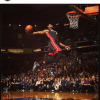
Keith Allison - Nash 02In November 2009, I introduced a series of articles I called ‘Social Media Report Card,’ where I graded each of the four major sports leagues – NBA, NFL, NHL, and MLB – on their social media presence. I made a point of being harsh. In particular, I criticized each of the leagues for only utilizing the major platforms (Twitter, Facebook, and YouTube) and not adopting some of the emerging platforms (Tumblr, Dailybooth, and Ustream), as well as for not interacting enough with the fans. The series received a lot of positive feedback, so I’ve decided to continue with my ‘Social Media Report Cards,’ this time focusing on individual athletes.

I chose to start with Steve Nash for a few reasons. First, Nash is one of my favorite athletes from any sport right now, which is saying a lot since I am typically a hometown fan (Phillies, Eagles, Sixers). Second, he has always been incredibly entertaining to watch on the court, and has also done some really cool and fun stuff off the court. Third, I think he is one of the most underrated social media users in the sports world. So without further ado, here we go!

Visibility (B+)

Steve Nash might have joined Twitter because of his former teammate, and social media rock star Shaquille O’Neal (@The_Real_Shaq & @The_Real_Nash), but he has fully embraced it and created a really great presence. He has more than 110,000 followers. Nash is also on Facebook, with over 575,000 fans. And to complete the trifecta, he has a YouTube account where he has racked up more than 630,000 total upload views. Before all of these, Nash was challenging fans to competitions (e.g. most free throws in a minute, staring contest) on Baron Davis’ social network, I Beat You. While I haven’t seen him go live on Ustream or snap photos on DailyBooth, Nash has embraced social media across a variety of platforms.

Read More

Will Social Media Become Ambush Marketing’s Favorite New Ammo?

by Kris Mathis | December 29th, 2009 | 3 Comments »

riacaleAs we turn the page and look ahead to 2010, let us address a topic most marketers have a strong opinion on: ambush.  Whether you believe ambush marketing of official events is creative and cost-efficient or an unethical and illegal mortal marketing sin, the fact is 2010 will see more of it than many marketers care to envision.  Global events such as the Olympics and World Cup will fuel the fire, as they have in the past, but this time the battleground may be waged on a relatively new frontier: social media.

Sure, some will attempt to solve ambush with legal claims such as trademark infringement and unfair competition. Last week Major League Soccer filed a lawsuit against Black and Decker for their Dewalt promotion around exhibition matches (competitor, Makita, is the official sponsor of MLS). However, ambush marketers – and their legal teams – will likely find new ways to skirt IP issues with the Olympics, especially in an environment without precedent like social media. When you’re spending 100 million for an official deal, both property and sponsor should probably be proactively identifying ways to mitigate ambush rather than (or at least as well as) relying on reactive legal remedies. Consider this, Coke spent an estimated $70 million to be one of the top 12 Olympic sponsors — and $5 million to $15 million more on the torch relay, but according to at least one study, up to 60% of consumers believed Pepsi was the official sponsor in Beijing. Scary stuff for CMO’s and properties.

Read More

Top 10 Sports/Social Media Trends of 2010

by Ryan Stephens | December 24th, 2009 | 3 Comments »

sports and social media 2010Jason Peck recently asked 16 sports industry thought leaders (a few of us who write here among them) to share their thoughts and predictions for sports and social media in 2010. The result was an awesome ebook full of some solid insights.

In this post I’d like to build off the foundation Jason (and the others) created and identify the top 10 trends to anticipate in 2010. My methodology was relatively simple. I read through the ebook a couple of times and took diligent notes on the reoccurring themes that emerged among the contributors’ predictions.

Here are the results:

1.) Transition to Social from Traditional – This is trend is happening everywhere, not just in sports. We’ll continue to see companies pull dollars out of traditional media and invest in growing their communities, engaging their fans, and providing unique experiences. This was never more evident than when Pepsi announced they were launching the Pepsi Refresh Project instead of buying Super Bowl spots this year.

Read More

For Iverson and the Sixers, the Answer is Social Media

by Sam Taggart | December 10th, 2009 | 3 Comments »

ebotFor the record, I am a Sixers fan, and I love Allen Iverson.

The Background

Three years ago, yesterday, Allen Iverson asked for a trade from the Philadelphia 76ers. “As hard as it is to admit,” he said, “a change may be the best thing for everyone.” Eleven days later, Iverson was traded to the Denver Nuggets, seemingly having played his last game as a Sixer.

This September, Iverson signed with the Memphis Grizzlies. He played three games (starting none) and averaged 22 minutes, 12.3 points, 3.7 assists, and 1.3 rebounds. However, the veteran could not accept his role as a bench player, and his relationship with the Grizzlies quickly deteriorated. In early November, he left the team for personal reasons, and on November 25th, he announced his intentions to retire from the National Basketball Association.

Read More

7 Social Media Tips for Sponsorship Sales

by Kris Mathis | December 3rd, 2009 | No Comments »

social media chartMarketers, and especially sports marketers, in my opinion are vastly more educated in social media than the majority of other professions.  99% of the talk about social media, however, is on how it can be used to market to consumers. Are there social media tips and tricks sponsorship pros can use to better support their sponsorship case to potential corporate buyers?  You bet… and they’re constantly evolving.  Let’s rundown a few and feel free to add your own at the bottom.

1. Don’t assume your audience is the same. You likely provide consensus demographics for on-site and broadcast. Okay, that’s great, but are you also considering the variance between your audience on-site and your audience online? Whether it’s Facebook, Twitter, LinkedIn or a number of other sites, presumably you’ll be finding ways for your sponsors to interact with consumers on these platforms too. The audience profile may vary dramatically from on-site (for better or for worse). As technologies mature, your on-site audience will likely more closely mirror your social media audience, but until then it’s wise to keep in mind the variance across your consumer touch points.

Read More

Social Media Report Card – The MLB

by Sam Taggart | December 1st, 2009 | 4 Comments »

MLBAh, baseball. America’s past time. The game has been around, and flourished, for a long, long time. In recent years (since the mid 90’s), baseball has hit a rough patch, with the Steroids Era. However, baseball is trying to change its image, and social media is part of that effort. Social media makes sense for a game that is inherently social for its audience. Going to the ballpark is as much about the hot dogs, peanuts, beer, and conversation with friends, as it is about the action on the field. Let’s see how the MLB does in my final edition of “Social Media Report Card.”

Visibility: B

As expected, the MLB is taking advantage of the Internet’s two biggest social media platforms, and has just about 750,000 followers on Twitter and 45,000 fans on Facebook. The league has also integrated Twitter chat into its MLB.tv streams. Even Minor League Baseball has an account on Twitter, with several hundred followers. However, the MLB does not have an account on YouTube and they are aggressive about removing any of their content that is posted by fans. The MLB has also failed to utilize emerging platforms (e.g. DailyBooth, Ustream). So far, none of the four leagues have taken advantage of those platforms. The first to do so will not regret it.

Read More

Social Media Report Card – The NHL

by Sam Taggart | November 24th, 2009 | 7 Comments »

NHLIn full disclosure, VaynerMedia assists the National Hockey League with their online and social media presence. Therefore, to be fair, I will not be assigning the NHL letter grades as I have done for the NBA and the NFL, rather I will leave it to you, the reader, to decide the league’s grade. Please leave your grades/thoughts in the comment section below.

In recent years, people have argued whether or not the National Hockey League can still be considered one of the four major sports. Compared to football, baseball, and basketball, hockey has suffered considerably in terms of popularity. While hockey has kept its die-hard fan base, the average sports fan doesn’t seem to be interested. Now, through social media, the NHL is finding a way to rebuild themselves and to tell their story. They are trying to get creative and attract a new audience, and regain the visibility they once had. So, how are they doing?

Read More

The Bowl Conundrum Structure Needs Public Relations Help

by Gail Sideman | November 23rd, 2009 | No Comments »

250px-Bowl_Championship_Series_logo.svgBCS.

Sometimes that’s all you have to say to launch a storm of criticism about today’s way to select the best team in college football.

Just ask Bill Hancock, last week’s newly named executive director of the Bowl Championship Series. To be sure, Hancock is no Johnny-come-lately. He was the first director of the Final Four who helped grow that event to its immense stature, and in my brief interactions with him, found him to be one of the nicest individuals in college athletics. None of that would save him from what Sports Illustrated’s Andy Staples called “one of the worst jobs in the world”, or an interview with Dan Patrick during which Hancock answered with scripted rhetoric and at times, seemed truly befuddled.

Read More

Social Media Report Card – The NBA

by Sam Taggart | November 9th, 2009 | 9 Comments »

Keith AllisonOver the next four weeks, I am going to write about the social media presence of the four major sports: the National Basketball Association, the National Football League, the National Hockey League, and Major League Baseball. Over the past year or so, each league has adopted social media in its own way, and each league has had varying degrees of success. I will grade each sport on its visibility across social media platforms, as well as content, fan engagement, and player involvement. This week, we’re talking basketball.

Visibility: B

The NBA operates powerful accounts on Facebook, Twitter, and YouTube, the three largest social media platforms at this time. On Facebook, the NBA has nearly 1.7 million fans. On Twitter, they have over 1.5 million followers. And on YouTube, the league has just under 13 million channel views and 163,000 subscribers. The NBA gets high marks for operating well-known and well-trafficked accounts across these platforms. The reason I’m giving the league a ‘B’ and not an ‘A’ is because they have failed to utilize emerging platforms that can provide incredible value for them (e.g. Ustream.tv, DailyBooth). Imagine if the league embraced live video streaming. What if David Stern did weekly live Q&A’s with fans, or if season ticket holders could talk with their team’s owner once per month? With the massive potential of these lesser-known platforms, the NBA could do wonders.

Read More

Why Sports Management Students Should Use Social Media

by Lewis Howes | September 16th, 2009 | 4 Comments »

Sports Management I recently had the pleasure to speak in front of 200 bright sports management students at York College in York, PA.  It was almost a little too scary as it brought back some memories from when I was a sports management student in 2005.

It was an honor, to say the least, to have the opportunity to share my experiences within the sports industry.  I talked about how companies are seeking out individuals because of their online footprint, and why going about the “traditional” way of finding a job (especially in one of the hardest industries to break into) was just not working that well for people in this economy.

It was inspiring for me to see the enthusiasm most of the students had.  Many greeted me before and after my speech to ask detailed questions, and I was able to give some potential step by step blueprints that would give them a better opportunity to landing the sports job of their dreams.  It was fun for me to share insights from the things I have personally been through, and I feel honored that Dr. Tim Newman (head of the sports management department at York) invited me to teach his students the “new rules” of marketing and PR in the sports industry.

Take a look at what Dr. Newman has to say about the challenges students face with using social media.  I think other institutions should start being less afraid to teach their students social media tactics, and start having more of a forward thinking mindset like Dr. Newman does with his.

What do you think?  Should students be diving into social media, or should schools be holding them back out of fear?   I am interested in your point of view on this topic.  I think the game has changed for students and they should have entire classes on social media marketing… agree or disagree?

Read More